 How-to
How to Estimate Profit on Small Flips: 2026 Guide
Table of Contents
- How to Estimate Profit on Small Flips: The Core Formula
- Step 1: Pin Down Purchase Price and Acquisition Costs
- Step 2: Build Realistic House Flipping Costs for a Small Project
- Step 3: Use an After Repair Value Calculator to Set Your Sale Price
- Step 4: How to Calculate House Flip Profit Line by Line
- Step 5: Check Your Math With a Small Flip Profit Calculator
- Step 6: Set Your Break-Even Price, Maximum Offer, and Contingency Range
- Conclusion
- Frequently Asked Questions
Last Updated: October 18, 2026
How to Estimate Profit on Small Flips: The Core Formula
Profit on a small flip is what's left after you subtract every cost from the sale price.
At Kala Group Capital, we review fix-and-flip budgets every week. The pattern is consistent: the flips that lose money are rarely the ones with bad purchase prices.
Here's the number that matters: net profit, not gross profit. Gross profit is sale price minus purchase price. Net profit is what actually lands in your bank account.
Below, we'll walk through the exact steps to build a profit estimate you can trust, including a worked example for a genuinely small project and a reusable worksheet you can copy.
Step 1: Pin Down Purchase Price and Acquisition Costs
Purchase price is the number on the contract. Acquisition costs are everything else you pay to close. Most new flippers budget for the price and forget the rest.
Acquisition costs typically include:
- Closing costs on the buy side (title, escrow, recording)
- Inspection and appraisal fees
- Loan origination points if you're financing
- Attorney fees where applicable
- Any back taxes or liens you agree to clear
A common mistake is treating closing costs as a rounding error. On a small flip, they're not. Even a modest set of fees can eat a meaningful slice of your projected margin if you leave them out of the estimate.
The Consumer Financial Protection Bureau's closing cost guide is a solid reference for what buyers typically pay at closing. Use it to build a realistic acquisition line, not a guess.
Step 2: Build Realistic House Flipping Costs for a Small Project
House flipping costs break into two buckets: hard costs (materials and labor) and soft costs (permits, design, dumpsters, and the small stuff).
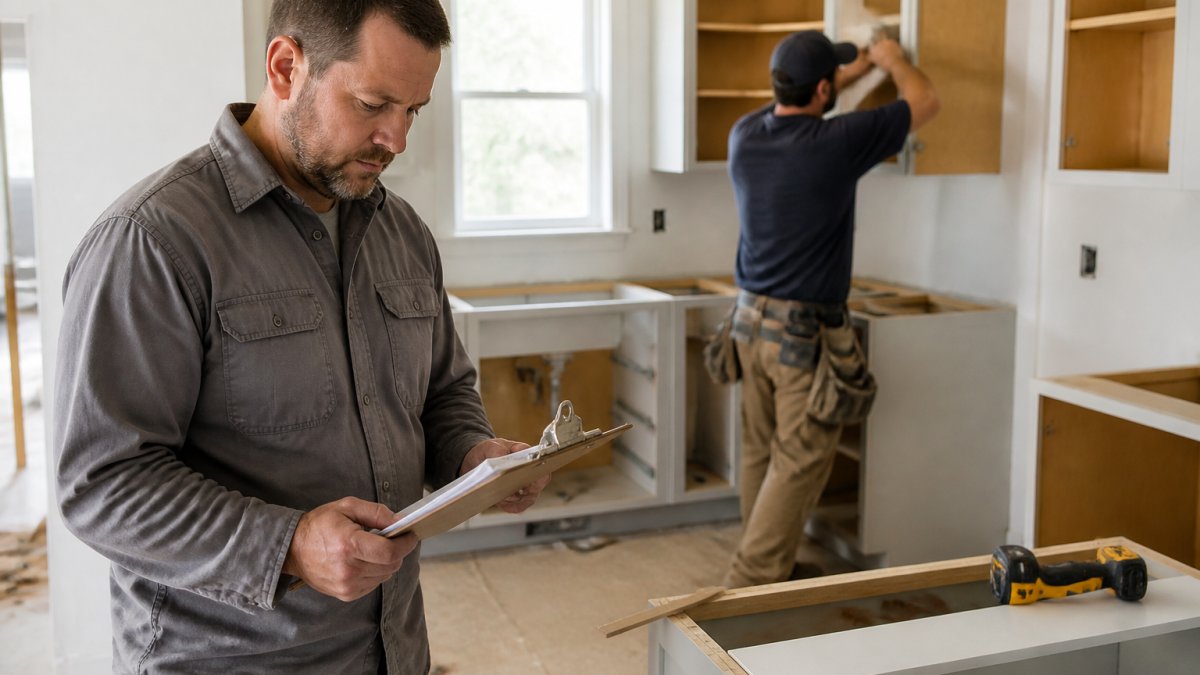
A realistic cost list for a small flip looks like this:
- Materials: flooring, paint, fixtures, cabinets, appliances
- Handyman and trade labor: plumber, electrician, painter, installer
- Permits and inspections
- Dumpster rental and debris removal
- Landscaping and curb appeal
- Cleaning and staging before listing
The mistake we see most often is a labor estimate built on the investor's own sweat equity. If you're doing the work yourself, price it as if you were paying a handyman.
Step 3: Use an After Repair Value Calculator to Set Your Sale Price
An after repair value calculator estimates what the property will sell for once renovations are done.
How to use one properly:
- Pull at least three recent comparable sales within a close radius
- Confirm each comp is the same property type and similar size
- Adjust for condition, bed and bath count, and lot size
- Weight the most recent and most similar comps heaviest
- Discount the result if the market is cooling
The Federal Housing Finance Agency's house price index is a useful check on whether local prices are rising or flattening.
After repair value is the estimated market value of a property after all planned renovations are complete. It drives your sale price assumption, your maximum offer, and your break-even calculation.
What most guides miss: comps from six months ago may not reflect today's market. Verify each comp's sale date and adjust.
Step 4: How to Calculate House Flip Profit Line by Line
To calculate house flip profit, list every cost as a line item, total them, and subtract from the expected sale price. No shortcuts. No "roughly $X for everything."
Here's a worked example for a genuinely small flip:
| Line Item | Amount |
|---|---|
| Purchase price | $120,000 |
| Acquisition costs (closing, inspection, points) | $4,500 |
| Renovation (materials + labor) | $22,000 |
| Permits and dumpster | $1,800 |
| Carrying costs (utilities, insurance, taxes, 4 months) | $3,200 |
| Financing costs (interest and fees) | $5,500 |
| Selling costs (commission, closing, concessions) | $9,000 |
| Total investment | $166,000 |
| Expected sale price (after repair value) | $195,000 |
| Net profit | $29,000 |
That's a realistic small-flip outcome. The gross spread looks like $75,000, but the net profit is $29,000 once every cost line is counted. This is why gross profit misleads people.
Run this same table for every deal. The IRS guidance on investment property and capital gains is worth reviewing so you understand how the profit will be taxed and what records to keep. Tax treatment affects your real return, not just your headline number.
Step 5: Check Your Math With a Small Flip Profit Calculator
A small flip profit calculator is just a spreadsheet that runs the line-item math for you and flags when a deal falls below your target margin. You do not need paid software.
Here is the reusable worksheet to build. Copy these rows into a spreadsheet and save it as your master template:
| Worksheet Row | What to Enter | Formula or Note |
|---|---|---|
| Purchase price | Contract price | Input |
| Acquisition costs | Closing, inspection, points, liens | Input |
| Renovation, hard costs | Materials and trade labor | Input |
| Renovation, soft costs | Permits, dumpster, cleaning, staging | Input |
| Repair contingency | Percentage of renovation total | Input, typically 10-15% on a small flip |
| Carrying costs | Utilities, insurance, taxes × months held | Monthly cost × months |
| Financing costs | Interest and lender fees | Input |
| Selling costs | Commission, closing, concessions | Percentage of sale price |
| Total investment | Sum of every cost row above | =SUM(...) |
| Expected sale price | Conservative after repair value | Input |
| Net profit | Sale price minus total investment | =SalePrice-TotalInvestment |
| Profit margin | Net profit ÷ sale price | =NetProfit/SalePrice |
| Return on investment | Net profit ÷ total cash invested | =NetProfit/TotalInvestment |
Return on investment is net profit divided by total cash invested. On the Step 4 example, $29,000 profit on $166,000 invested is roughly a 17% return. That is the number to compare across deals, not the raw dollar profit.
A common mistake is comparing flips by profit dollars alone. A $40,000 profit on a $400,000 project is a worse return than a $25,000 profit on a $150,000 project.
Run a three-case sensitivity check
A single-point estimate hides risk. Duplicate the worksheet three times and change only the uncertain inputs:
- Base case: your conservative after repair value, your line-item renovation budget, and your expected hold time.
- Downside case: sale price 5-10% below base, renovation 10-15% over budget, and one extra month of carrying costs.
- Upside case: sale price at the top of the comp range and renovation on budget.
If the deal only shows an acceptable profit in the upside case, it does not work. The downside case is the one that decides whether you can sleep at night.
Step 6: Set Your Break-Even Price, Maximum Offer, and Contingency Range
Your break-even sale price is the number where you make zero profit. Your maximum offer is the purchase price that still leaves you your target margin after every cost. Both protect you from overpaying, and both are simple formulas once your worksheet is built.
Break-even sale price
Break-even is the sale price that exactly covers every cost. Because selling costs are a percentage of the sale price, solve for the price rather than adding a flat number:
Break-even sale price = (Total costs excluding selling costs) ÷ (1 − selling cost percentage)
Using the Step 4 example: costs excluding selling costs total $157,000, and selling costs run about 6% of the sale price. Break-even is $157,000 ÷ 0.94 ≈ $167,000. Any sale below that number is a loss.
Maximum offer
Work backward from your conservative after repair value:
Maximum offer = Conservative after repair value − All costs except purchase price − Target profit
On the same example, a $195,000 conservative value minus $46,000 in non-purchase costs minus a $25,000 target profit leaves a maximum offer of $124,000. If the seller wants more, the deal no longer meets your target, walk away or renegotiate the scope.
Contingency range
Uncertainty is the part competitors skip. Your after repair value is an estimate, not a fact. Your renovation could run over. The market could soften. Build a range with three cases:
| Case | Sale Price | Renovation | Months Held | Net Profit |
|---|---|---|---|---|
| Upside | $205,000 | $22,000 | 4 | About $38,000 |
| Base | $195,000 | $22,000 | 4 | About $29,000 |
| Downside | $180,000 | $25,000 | 5 | About $10,000 |
Notice how fast the downside case compresses the profit. A 7-8% drop in sale price plus a modest repair overrun and one extra month of holding costs cuts the profit by roughly two-thirds. That is why the contingency line and the hold-time buffer matter more on a small flip than on a large one, there is less margin to absorb the same dollar surprise.
Conclusion
Estimating profit on small flips comes down to discipline: count every cost line, verify your comps, and build a contingency before you commit. The investors who consistently profit aren't the ones with the best guesses. They're the ones with the most complete cost lists.
When a deal is ready and you need capital fast, Kala Group Capital can help.
Apply Here with Kala Group Capital and get your next flip funded without the wait.
Frequently Asked Questions
What costs should you include when estimating profit on small flips?
Include every dollar that leaves your account from contract to closing: purchase price, closing costs, inspection and title fees, renovation labor and materials, permits, carrying costs like insurance and utilities, financing interest and points, and selling costs such as agent commission and seller concessions. Small flips hide costs in the details, so add a contingency line of 10 to 15 percent of the renovation budget. If a cost would not appear on a settlement statement or a contractor invoice, you probably forgot it.
How do you calculate profit margin on a fix-and-flip?
Divide net profit by total cash invested, then multiply by 100. If you put $60,000 into a small flip and clear $12,000 after every cost, your return on investment is 20 percent. Track this per deal, not per year, because flips turn over in months. A small flip with a 20 percent return in four months beats a larger project with the same return spread over twelve. Compare your projected margin against your own past deals to spot when a purchase price is too high.
How do you estimate a property's resale value after repairs?
Pull at least three recent comparable sales within a one-mile radius, sold in the last 90 days, with similar square footage, bed and bath count, and condition. Adjust the comps for differences: a renovated kitchen adds value, a busy street subtracts it. An after repair value calculator speeds this up, but verify each comp yourself. Do not use active listings as comps, since they show asking prices, not what buyers actually paid. If your comps are thin, widen the radius or pick a different deal.
What is the 70% rule in flipping, and does it still work for small flips?
The 70% rule says your maximum offer should be 70 percent of after repair value minus renovation costs. On a $200,000 ARV home needing $30,000 in work, that caps your offer at $110,000. It is a quick screen, not a precise calculation. Small flips often carry fixed costs, like permits and closing fees, that eat a larger share of a smaller budget, so run the full line-by-line math before you rely on the rule. Treat 70 percent as a starting filter, then verify with your worksheet.


