 ultimate-guide
Real Estate Investment Financing Options 2026
Table of Contents
- Real Estate Investment Financing Options: A 2026 Comparison
- DSCR Loan Requirements 2026: Qualifying for Rental Property Financing
- Fix and Flip Financing for Beginners: Getting Your First Project Funded
- Ground-Up Construction Loan Process: From Acquisition to Completion
- Hard Money vs. Private Money Lending: Speed, Cost, and Flexibility
- How to Qualify for Investment Property Loans in Today's Market
- Conclusion: Choosing the Right Real Estate Investment Financing
Last Updated: August 29, 2026
Real Estate Investment Financing Options 2026
Real estate investment financing has evolved significantly. Understanding which financing path works for your project is critical to closing deals on time and within budget. Whether you're flipping a single-family home, developing ground-up construction, or building a rental portfolio, the 2026 financing landscape offers speed and flexibility that didn't exist five years ago. The biggest mistake most investors make is treating all financing as interchangeable, it isn't. A DSCR loan for rental properties operates under completely different rules than fix-and-flip financing. Each has distinct qualification requirements, timelines, and cost structures. Get the wrong product, and you'll either miss the deal window or overpay by thousands in unnecessary fees and interest.
Below, we'll break down the major investment financing options available in 2026, show you exactly how to qualify for each one, and help you choose the right structure for your specific situation.
Real Estate Investment Financing Options: A Comprehensive Overview
Investment property financing has fractured into specialized products, each designed for a specific investor profile and deal type.
Conventional mortgages remain the baseline for long-term rental acquisitions, typically requiring 20-25% down payment and strong personal credit, with the lowest rates but longest approval timelines of 30-45 days.
DSCR loans (debt service coverage ratio loans) focus on the property's income, not your personal income, critical for self-employed investors or those with irregular W-2 income. They typically require 20-30% down and close in 10-14 days.
Fix-and-flip financing is short-term bridge capital for 6-12 month holding periods, prioritizing speed and exit strategy over credit scores, with typical terms of 70-80% of after-repair value and rates based on property condition.
Ground-up construction loans finance new builds from acquisition through completion, requiring detailed project plans, builder experience, and typically 20-30% down, with draws tied to construction milestones.
Hard money and private money lending are the speed tier, with decisions in days and funding in 5-7 business days, carrying higher rates (typically 8-15%) but zero underwriting delays.
Portfolio loans bundle multiple properties under one credit facility, useful for investors managing 5+ rental units simultaneously.
| Financing Type | Timeline to Fund | Typical Down Payment | Best For | Primary Qualification Factor |
|---|---|---|---|---|
| Conventional Mortgage | 30-45 days | 20-25% | Long-term rentals | Personal credit & income |
| DSCR Loan | 10-14 days | 20-30% | Income-producing properties | Property cash flow |
| Fix-and-Flip | 7-10 days | 20-30% | Short-term rehab projects | After-repair value & exit |
| Construction Loan | 21-30 days | 20-30% | New builds | Builder experience & plans |
| Hard Money | 5-7 days | 25-30% | Speed-critical deals | Property equity & exit |
| Private Money | 3-5 days | 25-35% | Relationship-based funding | Investor relationship |
DSCR Loan Requirements 2026: Qualifying for Rental Property Financing
A DSCR loan qualifies you based on what the property earns, not what you earn (fanniemae.com). DSCR stands for debt service coverage ratio, the property's annual rental income divided by its annual debt obligations. A property generating $36,000 annually in rent with $24,000 in annual mortgage payments has a 1.5 DSCR. Most lenders require a minimum of 1.0-1.25 DSCR, meaning the property's income must cover its debt payments (freddiemac.com).
Your personal W-2 income becomes secondary or irrelevant. Self-employed investors with inconsistent tax returns, 1099 contractors, and investors with complex income structures can qualify purely on property performance.
Documentation requirements for DSCR loans in 2026:
Most lenders require 12 months of lease agreements and rent payment history. If acquiring a property without existing tenants, lenders use market rent estimates based on comparable properties. Provide recent property tax records, insurance quotes, and a property management plan. Personal credit scores typically need to be 620 or higher, though some lenders work with scores as low as 580 for strong DSCR properties (consumerfinance.gov). Down payment requirements have standardized at 20-30%, depending on DSCR strength.
Closing timelines for DSCR loans have compressed significantly. Preliminary term sheets can arrive in under 5 minutes, with closings within 10-14 days for straightforward deals.
Fix and Flip Financing for Beginners: Getting Your First Project Funded
Fix-and-flip loans are short-term bridge financing designed for a specific exit: acquire a distressed property, renovate it, and sell it within 6-12 months. The lender isn't betting on your creditworthiness or income, they're betting on the property's after-repair value (ARV) and your ability to execute the renovation.
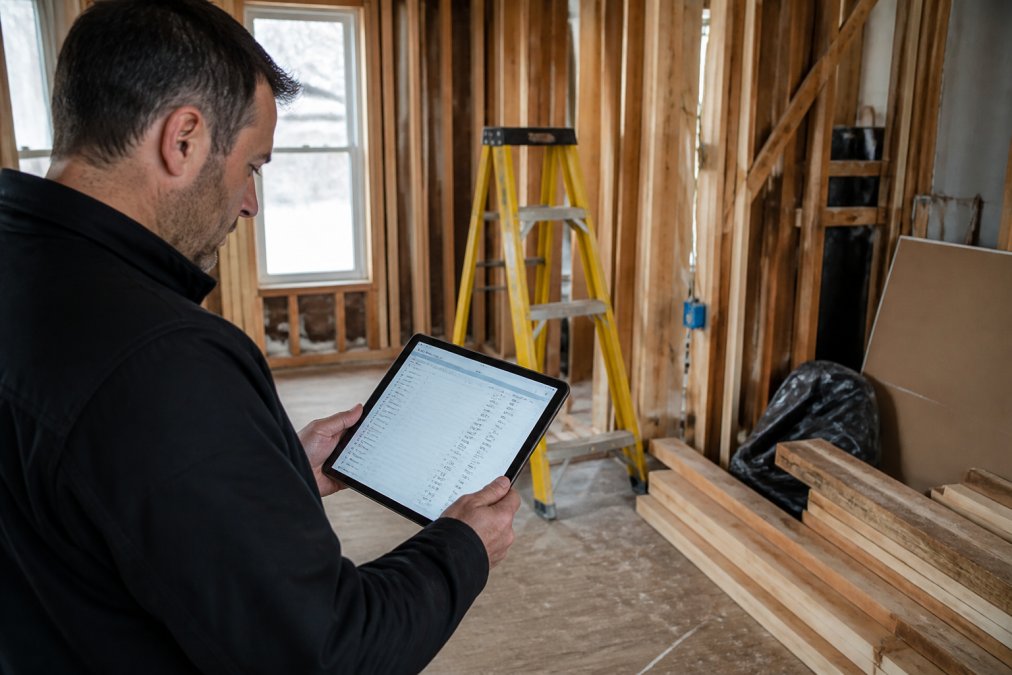
How fix-and-flip loans actually work:
You purchase a property for $200,000 that will be worth $320,000 after renovation, needing $80,000 in renovation costs. A fix-and-flip lender will typically fund up to 70-80% of the ARV ($224,000-256,000), covering your acquisition and renovation costs. You bring the remaining equity as your down payment. The lender funds the acquisition immediately, then disburses renovation funds as work progresses through submitted invoices and photos. Interest accrues monthly on the outstanding balance, so every month you hold the property costs money.
Qualification for fix-and-flip financing:
Credit scores matter less than deal structure. Most lenders want a 620+ credit score, but the real qualification is whether your numbers work. You need a clear exit strategy, detailed renovation scope with actual contractor quotes, proof of funds for your down payment, and contractor references or your own renovation track record. Personal income documentation is minimal.
Down payment requirements typically run 20-30% of the total project cost. A $200,000 purchase plus $80,000 renovation requires $56,000-60,000 down.
Closing timelines have compressed to 3-10 days for straightforward deals. The bottleneck is usually title work and appraisals, not underwriting.
Ground-Up Construction Loan Process: From Acquisition to Completion
Ground-up construction financing bridges two separate phases: land/acquisition and construction execution. Phase one funds the land acquisition and pre-development costs. Phase two funds actual construction, disbursed in draws tied to construction milestones.
The lender's risk profile differs completely from fix-and-flip or DSCR lending, they're funding a project that doesn't exist yet. This is why construction loans require detailed documentation: architectural plans, contractor bids, project timelines, and proof of pre-sales or committed end-buyers.
Documentation requirements for construction loans:
You'll need complete architectural drawings, engineering reports, and detailed construction specifications. Contractor selection matters enormously, most lenders require contractors with specific experience on similar-sized projects and verifiable track records. Budget documentation must be extremely detailed with actual bids from multiple contractors, broken down by trade, plus a 10-15% contingency reserve.
The draw process and timeline:
Construction loans disburse in draws tied to construction completion milestones: foundation complete, framing complete, roof on, rough mechanicals complete, drywall complete, and final completion. Each draw requires a lender inspection and contractor certification. This process typically takes 60-120 days longer than fix-and-flip financing because construction itself is the variable.
Most ground-up construction loans require 20-30% down payment, with the lender funding up to 70-80% of total project cost. Interest accrues on outstanding draws only, not the full loan amount, incentivizing efficient construction.
Personal credit and experience matter more for construction loans than for fix-and-flip. Lenders want to see that you've successfully completed similar projects.
Hard Money vs. Private Money Lending: Speed, Cost, and Flexibility
Hard money and private money lending are fundamentally different products serving different purposes.
Hard money lending is institutional lending from specialized hard money lenders who fund based on property equity, not borrower creditworthiness. Hard money lenders fund 65-75% of the property's current value (or after-repair value for distressed properties), charge 8-15% interest rates depending on LTV and deal type, and close in 5-7 business days. Your credit score is nearly irrelevant.
Private money lending is capital from individual investors, typically people you know or meet through real estate networks. Private money terms are completely negotiable, interest rates might be 6-10%, down payments might be 10-25%, and closing timelines might be 3-5 days.
The cost difference is significant. A $300,000 hard money loan at 12% interest costs $36,000 annually. A $300,000 private money loan at 8% costs $24,000 annually, a $12,000 difference over a 12-month project.
Hard money is best for deals where speed is critical, auctions with tight closing windows, or distressed properties where timing matters. Private money is best when you have relationships with investors who understand your business model and trust your execution.
Both are short-term bridges, typically 6-24 months. Neither is designed for long-term financing.
How to Qualify for Investment Property Loans in Today's Market
Qualification requirements have fragmented based on loan type, but certain fundamentals apply across all categories.

Credit score tiers in 2026:
Most lenders have moved away from hard minimum credit scores. Instead, they use tiers that affect rates and down payment requirements. A 740+ credit score might qualify you for the best rates with 20% down. A 680-720 score might require 25% down with slightly higher rates. A 620-680 score might require 30% down or be restricted to DSCR and hard money products.
Documentation checklist for investment property loans:
Personal financial documents: 2 years of tax returns (both personal and business if self-employed), 2 months of current bank statements, proof of liquid assets beyond the down payment.
Property documentation: current appraisal or recent comparable market analysis, property inspection report, title report showing clear ownership, lease agreements (for DSCR loans) or contractor bids (for construction loans).
Project documentation: detailed renovation budget with contractor quotes (fix-and-flip), architectural plans and engineering reports (construction), or property management plan and market rent analysis (DSCR).
The qualification process timeline:
Preliminary qualification happens in minutes. You submit basic information and the lender runs automated checks. Full qualification takes 5-10 business days for straightforward deals, including appraisal, title work, final credit verification, and underwriting approval. Complicated deals might take 14-21 days.
Debt-to-income ratio and cash reserves:
DTI requirements vary by loan type. Conventional mortgages typically require DTI below 43%. DSCR loans ignore personal DTI entirely. Hard money doesn't care about DTI at all.
Cash reserves have become more important. Most lenders want 6-12 months of PITI reserves for conventional mortgages, 3-6 months of property debt service for DSCR loans, and proof you can cover cost overruns for fix-and-flip deals.
Conclusion: Choosing the Right Real Estate Investment Financing
The real challenge in 2026 isn't finding financing, it's choosing the right product for your specific situation. Conventional mortgages work for long-term rentals. DSCR loans work when your personal income is irregular. Fix-and-flip financing works when you need speed and your exit is a sale. Construction loans work when you're building from the ground up. Hard money works when you need capital immediately and property equity is your qualification metric.
The competitive advantage in 2026 comes from choosing the right product quickly and closing faster than your competition. Kala Group Capital specializes in exactly this, delivering credit decisions in 30 seconds, preliminary term sheets in under 5 minutes, and closings within 3 days for loans from $500K to $2 Million. Our platform eliminates the underwriting delays that typically extend timelines to 30-45 days, which matters when you're competing for deals in a time-sensitive market.
The question isn't whether financing is available. It is. The question is whether you can close before someone else does. Apply here with Kala Group Capital and get a credit decision in 30 seconds, so you can focus on the deal instead of the paperwork.
Real estate investment financing has fundamentally changed in 2026. Speed and specialization now matter more than credit scores and income documentation. Whether you're flipping a property, developing ground-up construction, or building a DSCR rental portfolio, the right financing partner closes deals in days, not weeks. Kala Group Capital's simplified platform, fast credit decisions, and competitive rates across DSCR, Fix & Flip, and Ground-Up Construction loans help you move faster than your competition. Apply today and get funded within days.
Frequently Asked Questions
What is the difference between DSCR loans and conventional investment property loans?
DSCR loans qualify borrowers based on the rental income the property generates, not personal income. A property with strong rental cash flow can qualify even if your personal debt-to-income ratio is high. Conventional investment mortgages typically require you to prove personal income and maintain a lower debt-to-income ratio. DSCR loans are faster to underwrite and ideal for investors with multiple properties or self-employment income that doesn't appear clearly on tax returns.
How do credit scores affect real estate investment financing options in 2026?
Credit score tiers determine your interest rate, down payment requirement, and loan approval speed. Investors with scores above 740 typically qualify for the best conventional rates and lowest down payments (15-25%). Scores between 680-740 may face slightly higher rates or require larger down payments. Below 680, options narrow to hard money, private money, or specialized non-QM lenders. Non-QM lenders focus on the property's income potential rather than your credit alone, offering flexibility for self-employed investors or those with recent credit challenges.
What documentation do I need for a fix-and-flip loan application?
You'll need proof of funds or down payment source, recent bank statements (typically 2 months), tax returns (1-2 years), personal identification, and property details including purchase contract and after-repair value estimate. Having an appraisal, contractor bid, and detailed renovation scope ready accelerates underwriting and strengthens your application.
How quickly can I actually close on a real estate investment loan?
Timelines vary by lender type. Traditional banks typically close in 30-45 days. Hard money and private money lenders can close in 7-14 days. Specialized fintech platforms like those offering online applications may deliver preliminary approvals in minutes and close within 3-5 business days for qualified borrowers. Speed depends on documentation completeness, property type, loan amount, and whether you're a repeat borrower with the lender.
What is the loan-to-value ratio and why does it matter for investment property financing?
LTV is the loan amount divided by the property's value (expressed as a percentage). A property worth $500,000 with a $400,000 loan has an 80% LTV. Lower LTV ratios (60-75%) mean less lender risk, so you get better rates and easier approval. Higher LTV (80-90%) requires stronger cash reserves and credit. For fix-and-flips, lenders often base LTV on after-repair value rather than purchase price, allowing you to borrow more when the property has strong upside.
Can I get investment property financing if I'm self-employed with inconsistent income?
Yes. Traditional banks require 2 years of tax returns showing stable income, which is difficult for self-employed investors. DSCR loans focus on the property's rental income, not your personal earnings. Hard money and private money lenders evaluate the deal itself, the property, down payment, and exit strategy, rather than your tax returns. Non-QM lenders also accept alternative income documentation like bank statements, profit-and-loss statements, or accountant letters.
What are closing costs and how much should I budget for investment property financing?
Closing costs include origination fees, appraisal, title insurance, underwriting, and attorney fees. For investment properties, expect 2-5% of the loan amount, depending on lender and loan type. Hard money typically charges higher origination fees (2-3 points) but closes faster. Conventional loans have lower fees (0.5-1.5 points) but longer timelines. Points and fees vary by lender; request a detailed Loan Estimate upfront to compare true all-in costs across options.
This article was written using GrandRanker